
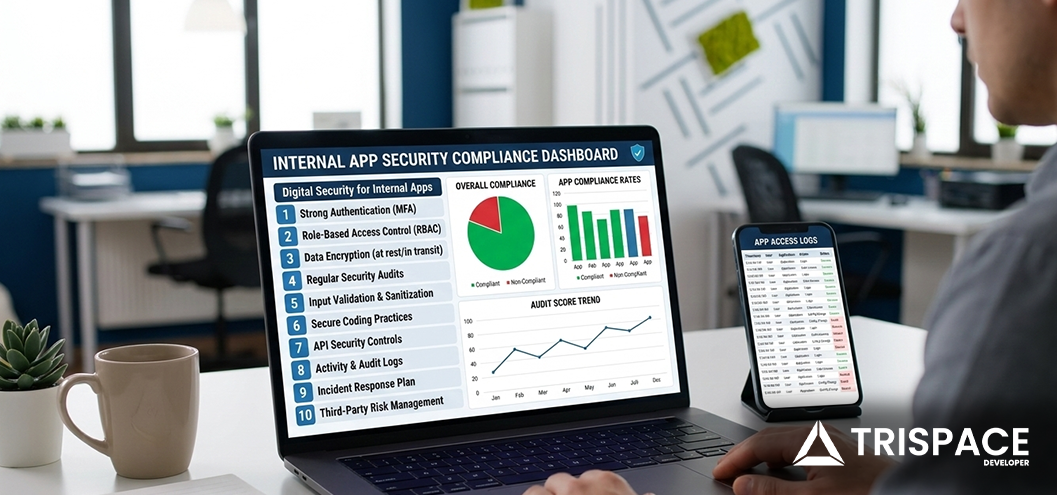
Today’s companies depend much on inside applications. Employees use these applications to plan projects, collaborate with colleagues, save vital information, and automate company procedures. Security takes on great significance because these systems house confidential corporate data. This underlines why, in Enterprise App Development, top priority should be on security. Internal applications are frequently related to corporate databases, employee information, financial records, and customer data. Hackers could get critical corporate data if security is poor.
Both the firm and its staff are protected by a solid security plan. Ten critical security measures every company should adhere to while developing internal applications are covered in this guide along with a basic Enterprise App development security checklist.
Why Security Matters in Enterprise Applications
Although the public may not always be able to see internal applications, they nonetheless carry significant security hazards. Because internal systems store priceless information, cyber attackers frequently aim at them.
Lack of adequate protection might cause businesses:
- Data violations
- Financial losses
- Operational disturbances
- Damage to brand equity
A safe Enterprise App Development approach prevents these issues. Organizations can preserve business continuity and safeguard their systems by incorporating security into the program from the beginning.
10 Must-Have Security Features for Internal Apps
Below are ten important security practices that should be included in every Enterprise App Development project.
1. Strong User Authentication
Employee identification accessing the application is confirmed via user authentication. Basic passwords by themselves won’t do. Businesses ought to install reliable authentication methods like:
- Multi-factor identification (MFA)
- Biometric authentication
- Safe login procedures
Strong authentication helps to stop unwanted access to inside systems during enterprise app development.
2. Role-Based Access Control
Not all staff members need access to every component of the system. Role-based access control guarantees that consumers only view the data needed for their work. For instance:
- HR personnel have employee records at their disposal.
- Finance departments can get financial information.
- Review of reports is available to management.
Defining these permissions to lower internal data abuse risk is part of secure enterprise app development.
3. Data Encryption
Encryption safeguards sensitive data against theft or interception. Data should be encrypted both,
- When it is being transmitted
- When it is kept in databases (at rest)
Modern enterprise app development practices use advanced encryption protocols to ensure company’s data remain safe and secure.
-
4. Secure API Integrations
Enterprise systems sometimes interface with external solutions including:
- Communication software
- Analytics platforms
- Payment systems.
Vulnerabilities can still be produced by unsure APIs, though. Secure Enterprise App Development guarantees that APIs are accurately authenticated, monitored, and protected from possible assaults.
5. Regular Security Testing
Application development requires an indispensable component: security testing. It helps find weaknesses before attackers can take advantage of them.
Common testing approaches for security include:
- Penetration analysis
- Vulnerability research
- Inspections of security
Incorporating periodic testing into enterprise app development helps companies to better guard against cyberattacks.
6. Secure Data Storage
Sensitive corporate information ought always to be held in safe surroundings.
Cloud storage solutions ought to include:
- Restrictions of Access
- Systems of backups
- Arrangements for recovering from disasters
Trustworthy enterprise app development guarantees data storage systems are safe and able to preserve sensitive information.
7. Continuous Monitoring
Constant surveillance is required even of the most secure systems. Real-time detection of suspicious behavior is made possible by ongoing monitoring.
For instance:
- Several incorrect login tries
- Access attempts without permission
- Strange data transmissions
By constant observation, enterprise app development teams can swiftly address possible hazards before they do damage.
8. Secure Code Practices
Bad coding methods can cause applications to have secret flaws. Developers have to adhere to secure coding guidelines including:
- Validation of user input
- Manage sessions securely.
- Protection against SQL injection assaults
Secure enterprise app development guarantees applications are constructed using dependable and safe coding methods.
9. Regular Software Updates
Rapid changes in technology mean that cyber threats develop as well. Regular application updates are required to patch security flaws and enhance system stability. Modern enterprise app development includes an organized update cycle to keep software current and safe.
10. Employee Security Awareness
Security is not guaranteed by technology alone. Employees also have to know how to safeguard company systems.
Companies should instruct employees to:
- Recognise phishing emails
- Set robust passwords
- Follow security policies
Businesses may foster a more secure digital environment by combining security awareness with great enterprise app development.
Building Secure Enterprise Applications
Never should security be considered as an afterthought. Every level of growth has to include it. Security should direct the whole enterprise app development process, from coding and planning to deployment and testing. Companies that spend on safe systems not only safeguard their data but also foster confidence among their partners and staff members.
The Importance of Choosing the Right Technology Partner
Constructing reliable corporate applications calls for thorough technical proficiency and industry experience. Many companies would rather collaborate with experienced development partners that have knowledge of modern security requirements and enterprise architecture. Here comes companies like Trispace Developer whose expert teams give security, scalability, and performance above simple usefulness. They enable companies to build internal apps that are both effective and quite safe and reliable by their strong approach to Enterprise App Development. Cooperating with the appropriate partner guarantees that every level of the program has security integrated throughout.
Looking to build secure internal applications for your business? A well-planned Enterprise App Development strategy can help protect your data, streamline operations, and support long-term growth.
Conclusion
Modern business activities depend critically on internal applications. These systems help day-to-day corporate operations, from employee management to sensitive data storage. Still, without adequate safeguards they can also be exposed to cyber attacks. Following a robust security checklist throughout Enterprise App Development enables companies to safeguard sensitive data, preserve system stability, and avoid expensive security breaches.
Creating safe company apps will remain a high priority as companies increasingly rely on digital tools.
FAQs
Q: What is Enterprise App Development?
Ans: Enterprise app development is the design of apps meant especially for companies to handle internal operations, data processing, and communication.
Q: Enterprise application security is crucial for what reasons?
Ans: Enterprise apps keep confidential corporate information. Robust security stops illegal access, cyberattacks, and data leaks.
Q: What is multi-factor verification?
Ans: Multi-factor authentication is a security approach whereby users must confirm their identification using more than one mechanism, such a password and a verification code.
Q: How frequently should business apps be refreshed?
Ans: Regular update of applications helps to resolve errors, boost performance, and guard against fresh cybersecurity threats.
Q: Can small businesses benefit from Enterprise App Development?
Ans: Yes. Even small businesses can use Enterprise App Development to improve efficiency, automate processes, and strengthen data security.